Tender Truths: How John Lennon Hid a Philosophy of Liberation Inside Songs for Children
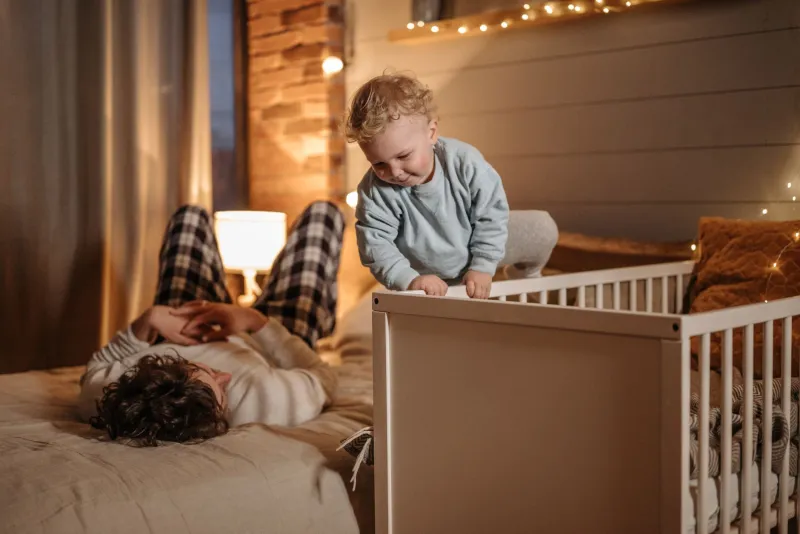
There is a particular kind of courage required to speak softly. In an era defined by amplified outrage — by marches, manifestos, and midnight press conferences staged inside hotel beds — John Lennon understood that some of the most revolutionary ideas travel best when carried on the quietest frequencies. Nowhere is this more evident than in the songs he wrote not for stadiums or front pages, but for a single child lying in the dark.
Lennon's catalog of music oriented toward children remains among his most underexamined legacies. Critics and scholars have devoted entire libraries to dissecting Imagine, to parsing the political theater of the Bed-Ins, to cataloguing the FBI surveillance files. Yet the lullabies and tender domestic compositions — those intimate transmissions between a father and his son — contain a philosophy just as coherent, and arguably more durable, than anything Lennon ever shouted into a microphone.
A Love Letter Disguised as a Lullaby
The most celebrated of these is, of course, Beautiful Boy (Darling Boy), released on Double Fantasy in 1980, mere weeks before Lennon's death. On its surface, the song is disarmingly simple: a father soothing a child's nighttime fears, counting down the hours until morning. But listen carefully, and the song reveals itself as a quiet manifesto.
"Life is what happens to you while you're busy making other plans" — a line borrowed from the writer Allen Saunders and immortalized in Lennon's voice — is not a throwaway sentiment. It is a direct rebuke of the American achievement mythology, the cultural pressure that tells children from their earliest years to optimize, to perform, to sacrifice the present moment for some imagined future reward. Lennon, singing to his son Sean, was encoding a counter-instruction: be here, be present, let the journey be the thing itself.
For American families navigating an education system increasingly defined by standardized metrics and competitive anxiety, that instruction carries the weight of genuine dissent.
The Demos Nobody Played on the Radio
Beyond the polished album tracks lies a more fragmentary, and in some ways more revealing, body of work. During his so-called "housedad years" between 1975 and 1980, Lennon recorded prolifically in the private spaces of the Dakota apartment — sketches, voice memos, and half-finished songs that circulated among collectors for decades before receiving wider attention. Several of these recordings reveal a man thinking deeply about childhood not merely as a biographical fact but as a philosophical category.
In various home recordings from this period, Lennon returned repeatedly to themes of wonder, unguarded curiosity, and the tyranny of received opinion. He appeared preoccupied with the question of what it means to protect a child's capacity for independent thought in a culture relentlessly engineered to produce conformity. These were not the concerns of a passive retiree. They were the concerns of a radical thinker who had relocated his activism from the public square to the nursery.
This relocation was itself a statement. At a moment when the American left was fracturing under the weight of its own contradictions, Lennon was suggesting that the most fertile ground for transformation might not be the protest march but the bedtime story — not the televised debate but the patient conversation between a parent who has seen something of the world and a child who is only beginning to look at it.
Innocence as a Political Concept
To understand what Lennon was doing in these songs, it helps to understand how he thought about childhood innocence — not as naivety to be eventually corrected, but as a form of moral clarity that adults spend their lives being trained to suppress.
This is a distinctly Romantic idea, traceable through William Blake and Walt Whitman, two poets whose influence Lennon acknowledged in various interviews. Blake's Songs of Innocence and Experience posited that the uncorrupted perceptions of childhood represent a kind of wisdom that institutional life — church, state, school — systematically dismantles. Lennon absorbed this framework and translated it into the vernacular of mid-century American pop culture.
When he sang to Sean about the beauty of the ordinary, about the miracle of simply waking up and existing in the world, he was doing something politically significant. He was modeling a mode of attention — slow, grateful, non-acquisitive — that stands in direct opposition to the consumerist restlessness that American capitalism depends upon to sustain itself. A child raised on Beautiful Boy receives, alongside the melody, a subtle orientation toward the world: that presence is more valuable than productivity, that love is not a transaction, that a person's worth is not indexed to their output.
What Movements Can Learn from Lullabies
The implications extend well beyond the biographical. Lennon's children's songs offer American progressive movements a model they have largely failed to develop: a grammar for speaking across generational lines.
Contemporary activism, for all its energy and moral urgency, often struggles to transmit its values to younger audiences in ways that feel genuine rather than instructional. The lecture and the slogan have their place, but they operate on the level of argument. Lullabies operate on a different level entirely — the level of felt experience, of emotional memory, of the associations we carry in our bodies long after we have forgotten the words.
Lennon understood intuitively what developmental psychologists have since confirmed: that the values most likely to persist across a lifetime are those absorbed in early childhood, not through direct instruction, but through the emotional texture of daily life. A child who grows up hearing that life is precious, that fear can be named and soothed, that the present moment deserves full attention — that child carries a different internal architecture than one raised on the anxious grammar of scarcity and competition.
For American parents navigating a cultural moment saturated with noise, division, and manufactured urgency, this is not a small insight. It is, in fact, a roadmap.
The Inheritance We Choose to Leave
In the weeks before his death, Lennon spoke in interviews about his hopes for Sean — not the ambitious hopes of a parent projecting achievement onto a child, but the quieter hope that his son would grow into someone capable of genuine feeling, genuine thought, genuine kindness. He described fatherhood as the most creative work he had ever done, which, coming from the man who co-wrote A Day in the Life, is a statement that demands to be taken seriously.
What the lullaby revolution Lennon quietly staged inside the Dakota apartment ultimately tells us is this: that transformation does not always announce itself with a press release. Sometimes it arrives in the form of a father sitting on the edge of a bed, singing to a child about the strangeness and beauty of being alive, planting seeds in the dark that will not bloom for decades.
For a nation still arguing about what it wants to become, that may be the most radical act of all.