When the Sidewalk Became a Sanctuary: How Lennon's Death Taught America to Grieve Together
The night John Lennon was shot outside the Dakota, something cracked open in the American psyche that had long been sealed shut. His death did not merely rob the world of a singular artist — it unlocked a form of collective mourning that the country had neither the language nor the ritual infrastructure to accommodate. What followed changed the way a nation learns to feel loss in public.
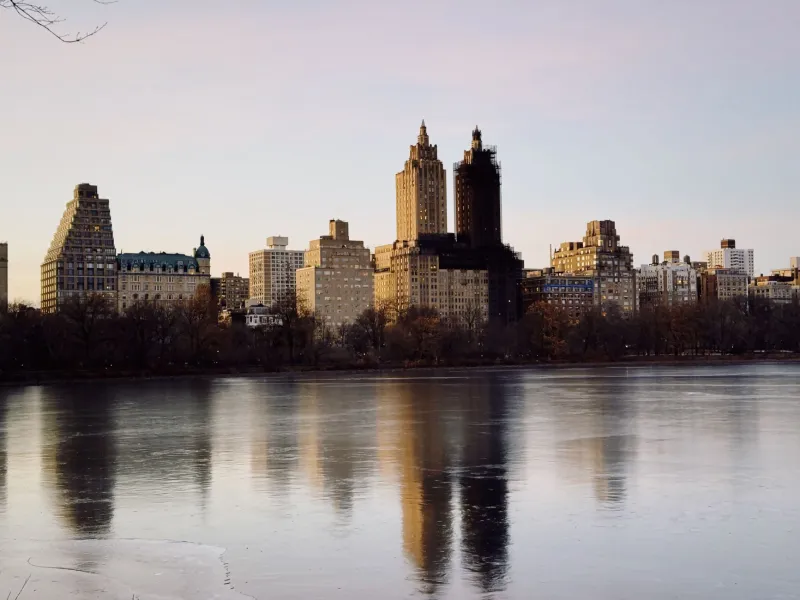
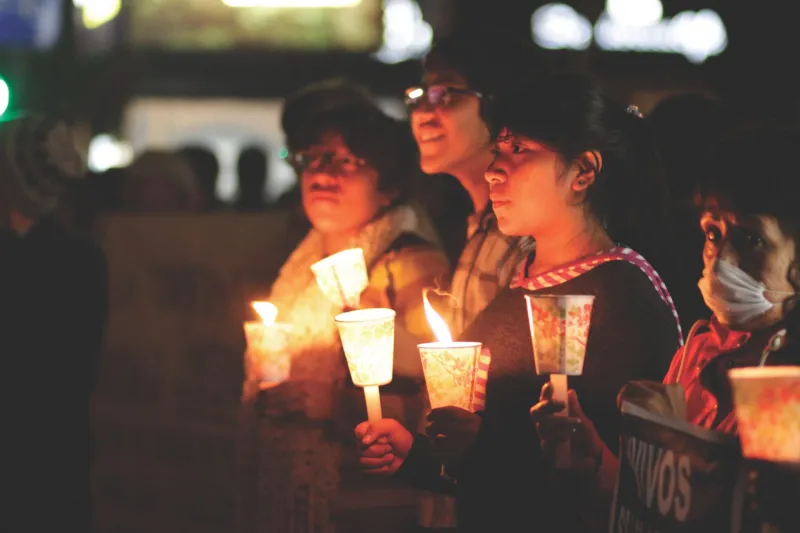
December 8, 1980, was a Monday. By Tuesday morning, thousands of people had already gathered on Central Park West without any coordinated call to action, without social media, without a single organizing body telling them where to stand or what to bring. They came anyway — with candles, with flowers, with transistor radios tuned to stations playing nothing but Lennon's music. They came because they had nowhere else to put what they were feeling, and the sidewalk outside the building where he had lived and died was the only address grief seemed to know.
What happened in those days, and in the weeks that followed, was not simply an outpouring of fan devotion. It was something more structurally significant: the emergence of a new American ritual for public mourning, one that had no clear precedent and has never entirely gone away.
A Nation Unprepared for Its Own Sorrow
By 1980, the United States had endured more than a decade of catastrophic public losses — the Kennedy assassinations, Martin Luther King Jr., the slow hemorrhage of Vietnam. And yet, for all that grief, there existed no broadly shared civic framework for processing tragedy at scale. Funerals remained private. Memorials were formal, state-sanctioned, and architecturally distant. The culture had not yet developed the vocabulary for what scholars would later call "spontaneous shrines" — those impromptu accumulations of flowers, photographs, handwritten notes, and personal objects that now appear instinctively at the sites of tragedy.
Lennon's death changed that calculus almost overnight. The response was not orchestrated by institutions. It arose from ordinary people who understood, perhaps before they could articulate it, that something had been taken from them that was not merely personal. He had been a figure around whom millions had organized their interior lives — their politics, their longing, their hope for a world that might one day be less brutal. His absence created a void that private grief could not fill alone.
The vigil that Yoko Ono called for on December 14, 1980 — ten minutes of silence observed simultaneously around the world — formalized what had already begun spontaneously. An estimated 100,000 people gathered in Central Park that afternoon. Millions more stood quietly in living rooms, on street corners, in workplaces across the country. It was, by any measure, one of the largest synchronized acts of collective mourning in American history, organized not by any government or religious institution, but by a bereaved widow and the unspoken consensus of a grieving public.
The Template That Persisted
What Lennon's death established — and what is easy to overlook in hindsight — was a cultural template for grief that has been reproduced, consciously or not, at virtually every major moment of public loss since. The candlelight vigil as a civic form. The spontaneous roadside memorial. The public square as a space for shared vulnerability. The idea that ordinary citizens have not only the right but the need to gather physically in the aftermath of tragedy, to make their sorrow visible and communal rather than hidden and solitary.
When the Space Shuttle Challenger broke apart over Florida in 1986, Americans gathered in school gymnasiums and town squares. When Princess Diana died in 1997, the flood of flowers outside Kensington Palace drew direct comparisons to what had unfolded outside the Dakota seventeen years earlier. After September 11, 2001, the missing-persons flyers and makeshift altars at Union Square in Manhattan bore an unmistakable genealogical resemblance to the grief architecture that had first appeared on Central Park West. And in the social media era, the digital memorial — the changed profile photo, the shared lyric, the flood of remembrance posts — represents nothing more than the same impulse translated into a new medium.
None of this is to suggest that Lennon's death invented grief. It is to argue that it gave American culture permission — explicit, public, witnessed permission — to grieve in ways that had previously been considered excessive, undignified, or uncomfortably emotional for a society that prized stoicism as a civic virtue.
Why Lennon, and Why Then
The question worth sitting with is why this particular death, at this particular moment, produced this particular rupture. Part of the answer lies in who Lennon was: not merely a celebrity, but a man who had spent the better part of a decade making his own vulnerability a public act. The Bed-Ins, the primal scream therapy, the raw confessional nakedness of tracks like "Mother" — these were not performances of invincibility. They were sustained arguments that human fragility deserved to be seen and honored rather than concealed.
In a culture that had long associated emotional openness with weakness, Lennon had modeled something different. He had demonstrated, repeatedly and at considerable personal cost, that honesty about pain was not a failure of character but a form of courage. When he was killed, the people who had absorbed that lesson responded in kind. They did not go home and grieve quietly. They went to the street. They wept in front of strangers. They held candles in the dark and let themselves be seen doing it.
There is also the matter of timing. By late 1980, the country was entering a cultural moment defined by a renewed emphasis on private achievement and individual resilience — a turn away from the communal idealism of the 1960s and toward something harder and more insular. Lennon's death arrived as a kind of counter-pressure, a reminder that the self is not sufficient to its own sorrow, that some losses are too large to be metabolized alone.
The Atomized Present and the Hunger for Ritual
More than four decades later, the cultural inheritance of that December night feels both more relevant and more fragile than ever. American society has grown, in many respects, more atomized — more mediated, more isolated, more accustomed to processing experience through screens rather than through shared physical presence. And yet the hunger for collective ritual has not diminished. If anything, it has intensified.
Every mass tragedy that produces a flood of digital memorials, every public figure's death that fills a city's central park with candles and handwritten notes, every moment when strangers gather not because they were told to but because they needed to — all of it points back to a sidewalk on the Upper West Side in December 1980, and to the man who, even in death, was teaching the country something about the necessity of feeling together.
Lennon spent his life arguing that peace was not merely the absence of conflict but the presence of genuine human connection. It is one of the more devastating ironies of his legacy that it took his murder to prove him right — to demonstrate that a society, however fractured, however armored against its own tenderness, will find its way to a common space when the grief is large enough to demand it.
The sidewalk became a sanctuary. It has never entirely stopped being one.