Whispered Revolutions: Why John Lennon's Softest Songs Were His Most Dangerous
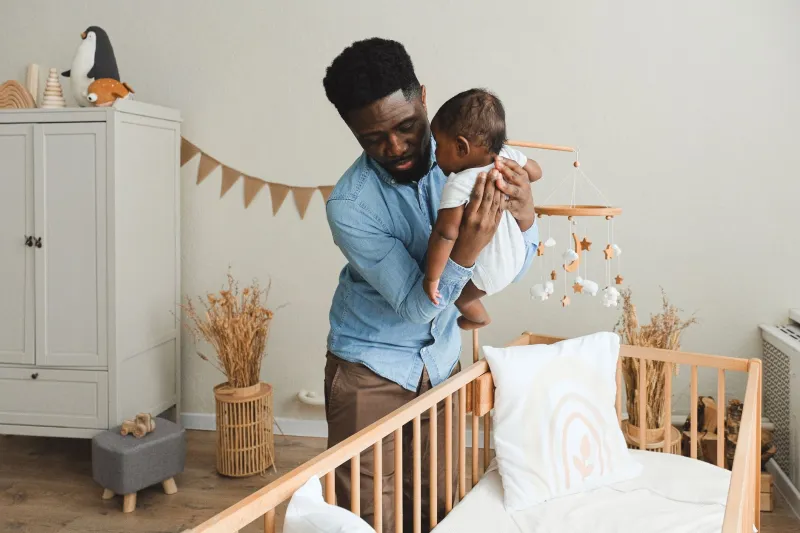
There is a particular kind of courage that does not announce itself. It does not raise a fist or commandeer a microphone. It sits beside a crib in the small hours of the morning, humming something gentle into the dark, and in doing so, quietly refuses every violent norm the surrounding world insists upon. John Lennon understood this courage — perhaps more deeply than he understood any other — and he practiced it in the songs that history has most often overlooked.
We remember Lennon for "Power to the People," for "Give Peace a Chance," for the confrontational architecture of Some Time in New York City. These recordings belong to a tradition of dissent that Americans recognize immediately: loud, declarative, impossible to ignore. But to understand Lennon's peace philosophy in its fullest dimension, one must turn down the volume considerably and listen for what emerges in the quieter registers of his catalog — the lullabies, the domestic ballads, the songs written not for arenas but for one small boy in a Dakota apartment.
The Revolutionary Grammar of Gentleness
When Lennon released Double Fantasy in 1980, after five years of deliberate withdrawal from public life, critics were divided. Some found the album's domesticity disarming. Others found it disappointing. What very few recognized at the time was that the album's tenderness was itself a thesis statement — a philosophical position as carefully constructed as anything Lennon had offered from a bed in Amsterdam or a stage in Toronto.
Songs like "Beautiful Boy (Darling Boy)," written for his son Sean, do not argue for peace in the conventional sense. They do not name enemies or demand policy changes. Instead, they model something rarer and arguably more difficult: the sustained practice of attentiveness toward another human being. "Every day, in every way, it's getting better and better," Lennon sings, borrowing from the French psychotherapist Émile Coué — but transforming the affirmation into something warmer, more specific, more earned. It is a line sung to a child, yes. It is also a line sung against despair, against the cultural machinery that profits from our collective conviction that things cannot improve.
In the American context, this matters enormously. The United States has long maintained a cultural suspicion of softness in men, particularly in public men, and most particularly in men who have previously demonstrated toughness. Lennon had been a Beatle. He had been acerbic, witty, occasionally cruel. His pivot toward open vulnerability — toward fatherhood as a public identity, toward the lullaby as a legitimate artistic form — represented a direct challenge to every assumption American masculinity makes about what strength looks like.
Tenderness as Counterculture
To appreciate how radical this pivot was, it helps to situate it historically. By the late 1970s, the American peace movement had largely exhausted its most visible strategies. The Vietnam War had ended, but the cultural wounds it opened had not healed. Protest, as a form, had begun to calcify into performance. The movements that had once crackled with genuine moral urgency were struggling to sustain momentum.
Lennon, characteristically, was looking elsewhere. His "house husband" years — during which he baked bread, raised Sean, and largely absented himself from the music industry — have often been interpreted as retreat. But they are more accurately understood as laboratory. He was testing a hypothesis: that the most durable form of peace activism might not be the march or the manifesto, but the daily, unglamorous, deeply personal work of nurturing another human being toward wholeness.
The lullaby, in this framework, is not a minor form. It is a practice of presence. It requires the singer to slow down, to attend, to subordinate ego to the needs of someone entirely dependent. In a culture that rewards velocity, noise, and self-promotion, the deliberate cultivation of these qualities is not passive. It is, to use a word Lennon himself favored, imagine-ative — it asks us to conceive of a world organized around care rather than competition.
What the Quiet Songs Teach Organizers
For those engaged in contemporary social movements — and the American landscape in 2024 offers no shortage of urgent causes — Lennon's gentle catalog raises a question that deserves serious consideration: what is the relationship between the softness we practice in private and the justice we pursue in public?
There is growing evidence, both anecdotal and empirical, that activist communities in the United States are experiencing profound burnout. The relentlessness of the news cycle, the demands of social media visibility, and the genuine weight of the crises being confronted have left many organizers depleted. In this context, Lennon's insistence on the revolutionary value of rest, care, and quiet feels less like nostalgia and more like prescription.
"Beautiful Boy" does not solve systemic inequality. "Watching the Wheels" does not dismantle the surveillance state. But they model something that systems of oppression consistently work to erode: the capacity to be fully present with another person, to find meaning in small gestures, to believe that the texture of daily life is itself a site of political significance. Sustainable movements are built by people who have not entirely surrendered their interior lives to the cause. Lennon seemed to understand this intuitively.
The Peace Bed and the Nursery
The imagery of the Peace Bed — Lennon and Yoko Ono conducting their 1969 Bed-Ins from beneath white sheets, turning the act of lying down into an act of defiance — has become one of the iconic images of twentieth-century protest. But there is another bed in the Lennon story, less photographed and perhaps more instructive: the bed beside which he sat in the Dakota, singing his son to sleep.
Both beds make an argument. The first argues against war through spectacle and wit. The second argues against violence through example — through the daily demonstration that a human being, even one with Lennon's history of volatility and self-destruction, can choose tenderness as a discipline. Can choose, again and again, to meet vulnerability with care rather than deflection.
This is not a smaller argument. In many respects, it is a harder one to sustain.
Hearing What Was Always There
Listening to Lennon's gentle songs now, decades after they were recorded, one is struck by how contemporary their emotional logic feels. In an America still grappling with epidemic loneliness, with the collapse of communal institutions, with a political culture that rewards cruelty and punishes nuance, the lullaby-as-manifesto carries a specific kind of urgency.
It tells us that peace is not only a geopolitical condition to be negotiated between states. It is also a relational practice to be cultivated between people — in homes, in families, in the unremarkable moments that make up the vast majority of a human life. It tells us that the revolutionary act of singing softly to a child in the dark is continuous with, not separate from, the larger project of building a more just world.
John Lennon did not always live up to this vision. His personal history is complicated, and intellectual honesty requires acknowledging that. But the songs remain. And in their quietness, they continue to make their case — not with volume, but with something more difficult to dismiss: the unmistakable sound of a person trying, earnestly and imperfectly, to be tender in a world that keeps asking him to be hard.