Silence as Instruction: The Compositional Genius That Made 'Imagine' a Mirror, Not a Megaphone
Photo: Le Miroir des sports, Public domain, via Wikimedia Commons
There is a paradox at the heart of one of the most recognized songs in American musical history. "Imagine" is, by any reasonable measure, a radical piece of political art. It proposes the dissolution of nations, organized religion, and private property in the span of three minutes and seven seconds. And yet, for more than five decades, it has been played at Olympic ceremonies, elementary school graduations, and candlelight vigils without provoking the kind of institutional resistance that greeted nearly every other entry in John Lennon's activist catalog. The question worth sitting with is not why the song endures — but how it was constructed to endure, and what that construction reveals about the relationship between artistic form and political persuasion.
The answer, it turns out, lives almost entirely in what the song refuses to do.
The Piano as Invitation
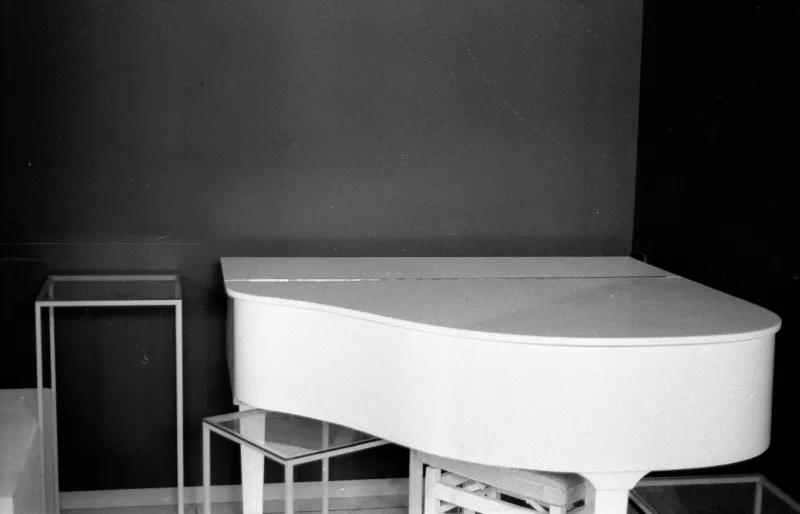
When Lennon sat down at the white Steinway grand in his Ascot estate in the spring of 1971, he made a choice that would define the song's entire emotional register: he began with a simple, unhurried arpeggio pattern that moved at the pace of a breath rather than a beat. The tempo was slow enough to feel contemplative, not propulsive. There was no rhythmic urgency demanding the listener keep up. The piano, in this configuration, was not performing — it was waiting.
Producer Phil Spector, famous for his thunderous Wall of Sound, was present during the recording sessions, yet the finished product bears almost none of his signature density. The instrumentation that does appear — a gentle string arrangement, a soft drumkit played with brushes, an understated bass line — enters so gradually and sits so far back in the mix that most listeners cannot recall it being there at all. This was not an accident of budget or time. It was a deliberate act of subtraction.
By stripping the sonic environment down to near-silence, Lennon created what might be called an acoustic invitation. The listener does not feel crowded out by the music. There is space — genuine, audible space — between the notes, and it is into that space that the listener pours their own associations, their own grief, their own longing. The song becomes a vessel rather than a vessel's contents.
The Voice That Does Not Preach
Lennon's vocal delivery on "Imagine" is among the most studied performances in rock history, yet the technical choices behind it are rarely discussed in plain terms. His voice was recorded with minimal processing — no heavy compression, no pitch correction, no reverb designed to make him sound larger than life. What reaches the listener is a voice that sounds, remarkably, like a person thinking out loud.
The phrasing is unhurried to the point of seeming unfinished. Lennon does not land hard on the words that carry the song's ideological weight. He does not punch "no countries" or lean into "brotherhood of man" with the evangelical fervor those phrases might seem to demand. Instead, he floats through them with the same casual intimacy he might use to describe a dream he had the night before. The effect is disarming in the most literal sense: the listener's defenses — the ones that activate whenever someone appears to be telling them what to think — simply do not engage.
This was, in retrospect, a profoundly sophisticated political calculation. Lennon had watched his more explicitly confrontational recordings generate heat without generating change. "Power to the People" raised fists; "Imagine" opened hands.
What Gets Left Out
Perhaps the most instructive lesson the song offers to contemporary artists is the discipline of omission. "Imagine" does not explain itself. It does not cite sources or build a logical argument. It does not anticipate counterarguments or hedge its claims. It simply asks the listener to perform a single, repeatable cognitive act: imagine.
That imperative — second person, present tense, requiring active mental participation — is the structural engine of the entire piece. The listener is not a passive recipient of Lennon's vision. They are a co-author of it. Every time someone hears the song, they populate the imagined world with their own specific details, their own lost loved ones, their own version of peace. The song provides the frame; the listener provides the painting.
This is the compositional insight that separates "Imagine" from the vast majority of protest music, then and now. Most activist art tells you what to feel. "Imagine" creates the conditions in which you feel it yourself — and therefore own it, and therefore carry it forward.
A Blueprint for the Present
In an era when American cultural discourse is defined by noise — algorithmic amplification, outrage cycles, the relentless competition for attention — the architecture of "Imagine" reads as a counter-manifesto for artists who want their work to last. The temptation in politically engaged art is always toward more: more urgency, more explanation, more righteous anger. Lennon's most enduring contribution suggests the opposite impulse.
Leave room. Slow down. Trust the listener.
The sparse piano that opens the song is not a poverty of imagination. It is an act of profound generosity — the artist stepping back so the audience can step in. In a media landscape that leaves almost no silence unfilled, that kind of restraint is not merely an aesthetic choice. It is, as Lennon seemed to understand intuitively, a political one.
The peace bed, in Lennon's conception, was always a space of invitation rather than instruction. "Imagine" is the sonic equivalent of that space: a room with the door left open, warm light inside, no one telling you how long to stay.