Plain Words, Radical Vision: How 'Imagine' Was Engineered to Change Minds Without Raising Its Voice
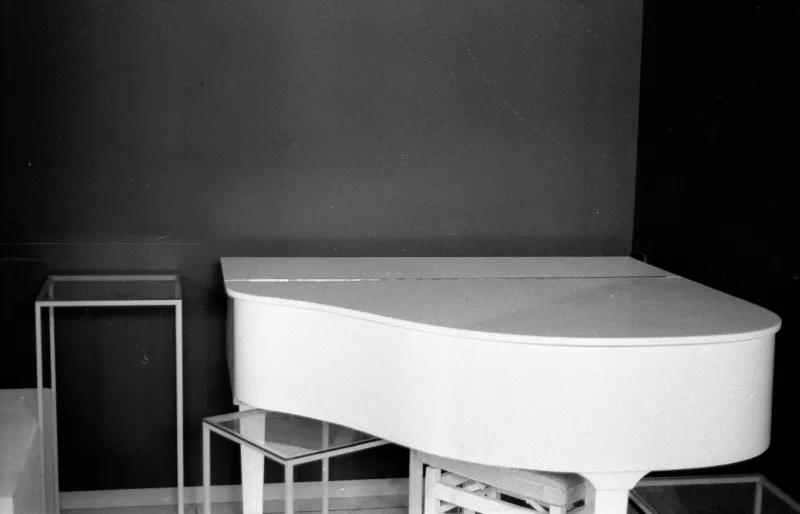
There is a particular kind of courage in restraint. In the summer of 1971, John Lennon sat at a white grand piano in his Ascot estate and recorded a song that proposed the abolition of nations, organized religion, and private property—and somehow made the proposition feel like a warm invitation rather than a declaration of war. That achievement was not accidental. It was architectural.
To understand why 'Imagine' has outlasted virtually every other protest song of its era, one must resist the temptation to attribute its staying power to sentiment alone. The song endures because Lennon made a series of precise, disciplined decisions—about melody, grammar, repetition, and philosophical framing—that transformed a genuinely radical manifesto into something that felt, to millions of ordinary listeners, like a thought they had always meant to think.
The Grammar of Invitation
The first word of the song is not a demand. It is not an accusation. It is not even a statement. It is a request.
Imagine.
That single imperative verb does something that decades of protest literature had largely failed to accomplish: it positions the listener as a willing participant rather than a passive recipient of someone else's ideology. Lennon does not tell you what the world should look like. He asks you to picture it yourself. The distinction is not merely rhetorical—it is psychologically transformative. Research in persuasion consistently demonstrates that people are far more likely to adopt a position they believe they arrived at independently. By opening with an invitation to imagine, Lennon effectively made his audience co-authors of his vision.
This is precisely what most contemporary activists misunderstand about Lennon's method. The impulse to inform, to correct, to enumerate injustices—however valid—often produces the opposite of persuasion. 'Imagine' contains almost no information in the traditional sense. It offers no statistics, no historical citations, no policy prescriptions. What it offers instead is a feeling of possibility, and it delivers that feeling through the front door rather than forcing it through a window.
The Architecture of Repetition
Lennon structures the song as three parallel stanzas, each beginning with the same word and each proposing the elimination of a different category of human division: heaven and hell, national borders, and economic inequality. The repetition is not lazy—it is cumulative. By the third verse, the listener has already accepted the imaginative premise twice. The rhetorical ground has been prepared.
Musically, the song operates on a similarly spare architecture. The piano figure is deliberate in its plainness—a gentle, rolling pattern that suggests neither urgency nor complacency but something closer to patient certainty. Producer Phil Spector, who had built his reputation on walls of orchestral sound, was given relatively little to work with here, and the restraint is audible. The song breathes. It does not crowd the listener.
That breathing space is ideologically significant. A more densely arranged production might have signaled the song as belonging to a particular cultural tribe—the counterculture, the left, the avant-garde. Instead, the sonic minimalism kept the door open to listeners who might have otherwise dismissed the content on aesthetic grounds alone. Lennon understood, perhaps better than any of his contemporaries, that the medium was inseparable from the message.
Radical Ideas in Borrowed Clothes
The philosophical content of 'Imagine' is, by any honest measure, genuinely radical. The abolition of private property has been a cornerstone of socialist and communist thought for over a century. The dismissal of organized religion as a source of human conflict aligns with strains of Enlightenment critique that have never found a comfortable home in American public life. The vision of a borderless world challenges the foundational premise of the nation-state.
And yet the song has been performed at presidential inaugurations, Olympic opening ceremonies, and memorial services for tragedy victims across the political spectrum. How does a song proposing the end of nations become the soundtrack to national mourning?
The answer lies in Lennon's deliberate choice to dress radical content in the language of universalism rather than ideology. He does not invoke Marx or Bakunin. He does not name enemies or assign blame. He frames each proposition not as a political program but as a natural consequence of human empathy extended to its logical conclusion. Imagine all the people sharing all the world is not, on its surface, a call to revolution. It is an expression of a feeling most people already possess—the feeling that human suffering, anywhere, is a diminishment of human dignity everywhere.
Lennon borrowed the clothes of sentiment and wore them to smuggle in something far more structurally ambitious.
What the Song Refuses to Do
Perhaps the most instructive aspect of 'Imagine' is what Lennon chose to leave out. There is no villain. There is no specific grievance. There is no call to action in the conventional sense. The song does not tell you whom to vote for, what to march against, or which institution to dismantle first.
This restraint has frustrated generations of more doctrinaire activists, who have sometimes dismissed the song as vague or insufficiently militant. That criticism, while understandable, misses the point entirely. 'Imagine' was never designed to be a tactical document. It was designed to be a threshold—a low, welcoming threshold that almost anyone could cross without feeling they were surrendering something of themselves in the process.
The songs that lecture tend to be sung only by the already converted. The songs that invite tend to travel further.
A Lesson Still Unlearned
In an era of algorithmically sorted information and ideological self-sorting, Lennon's method feels not merely relevant but urgently prescient. The American public square has become a space of competing assertions, each louder than the last, each aimed at audiences already predisposed to agree. The art of persuasion—of genuinely moving someone from one position to another—has become almost unfashionable.
'Imagine' stands as a rebuke to that tendency. It is a reminder that the most consequential act of communication is not the one that most accurately describes the problem, but the one that most effectively expands the imagination of the person you are trying to reach.
Lennon built that song with plain words and a patient melody, and in doing so, he constructed something that has outlasted every manifesto of his generation. The architecture is still standing. The question is whether anyone is paying close enough attention to learn from it.