Ghosts in the Grooves: What John Lennon's Unfinished Recordings Reveal About a Revolution Left Incomplete
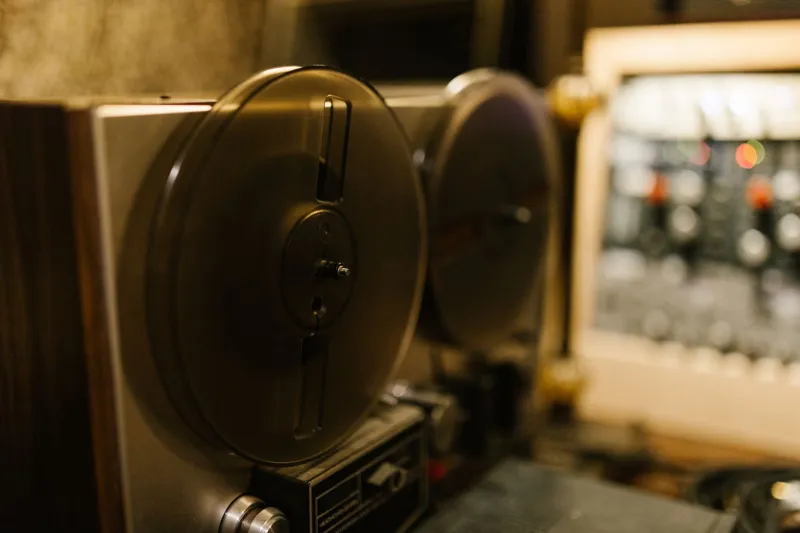
There is a particular kind of silence that follows an unfinished sentence. It is not the silence of rest or conclusion, but the silence of interruption — of meaning suspended in mid-air, waiting for a resolution that never arrives. That is precisely the quality that haunts John Lennon's vast archive of unreleased recordings, abandoned demos, and half-realized compositions. Scattered across tape reels and session logs, these artifacts constitute a shadow discography: one that, in many respects, tells us more about the interior life of a peace activist than the polished records that made him famous.
For a nation still grappling with questions of war, surveillance, inequality, and civic courage, the songs Lennon never finished carry an almost unbearable relevance. They are not merely curiosities for devoted fans. They are dispatches from a conscience that refused to stand still.
The Archive as Political Document
Most listeners know Lennon through the songs that were completed, sequenced, and released into the world with deliberate intention. Imagine, Working Class Hero, Give Peace a Chance — these compositions arrived shaped and sharpened, their rougher edges smoothed in service of clarity. But the unreleased material tells a different story: one of searching, of false starts, of ideas that were too raw or too radical or simply too unresolved to commit to final form.
Among the most discussed fragments are the recordings made during the Dakota years, the period of domestic retreat Lennon entered in the mid-1970s following the birth of his son Sean. Bootleg enthusiasts and musicologists have long circulated references to home recordings from this era — piano sketches, lyrical fragments, voice-memo confessionals — that suggest a man actively renegotiating his relationship to public activism. Some of these sketches reportedly engaged with American political disillusionment in the post-Watergate, post-Vietnam landscape in ways that his officially released Double Fantasy only approached obliquely.
The significance here extends well beyond musicology. When we treat these recordings as political documents rather than mere studio leftovers, they reveal an activist whose ideology was not fixed but fluid — continuously tested against lived experience, parenthood, exile, and the creeping exhaustion that follows years of sustained public dissent.
Unfinished as Honest
There is a compelling argument to be made that Lennon's unfinished work is, paradoxically, his most honest. The finished record is a negotiated product — between artist and producer, between conviction and commercial viability, between the private self and the public persona. The demo exists before those negotiations begin. It is the thought before the edit, the belief before the performance.
Several fragments that have surfaced over the decades — some officially acknowledged, others known only through bootleg circulation — reveal Lennon wrestling with contradictions he rarely allowed to appear in his released work. The tension between his stated solidarity with working-class Americans and his own extraordinary wealth. The conflict between his advocacy for nonviolence and the rage that surfaced in his more unguarded moments. The ambivalence about whether art could genuinely transform political reality or whether it was, ultimately, a beautiful and impotent gesture.
These are not comfortable revelations. But they are important ones. A peace movement built on idealized figures rather than complicated human beings is a movement constructed on unstable ground. Lennon's unfinished recordings, in their rawness, offer something more durable: a model of activism as ongoing inquiry rather than arrived conclusion.
What the Abandoned Projects Suggest
Beyond individual song fragments, Lennon left behind evidence of larger conceptual projects that were never realized. References exist — in interviews, in the recollections of collaborators, in studio documentation — to proposed albums and multimedia works that would have engaged directly with American political life in ways that might have reshaped his legacy considerably.
One frequently cited example involves material Lennon was reportedly developing in the months before his death in December 1980 — compositions that, according to those close to him, reflected a renewed engagement with social commentary after the relative personal quietude of Double Fantasy. The precise nature of this material remains largely speculative, filtered through decades of secondhand account and hagiographic embellishment. Yet the pattern it suggests is consistent with everything we know about how Lennon worked: in cycles of withdrawal and re-engagement, each return to the public arena informed by the private reckoning that preceded it.
Had these projects reached completion, they would have arrived into a United States entering the Reagan era — a political environment in which the cultural stakes of dissent were rising sharply. The imagination of what Lennon might have said to that moment is not mere fan fantasy. It is a legitimate exercise in understanding how artistic voices shape political possibility.
The Creative Process as Peace Practice
What the unreleased archive ultimately illuminates is that Lennon's peace activism was not confined to finished statements. The process itself — the searching, the drafting, the discarding, the returning — was an expression of his deepest commitments. He did not believe that peace was a destination to be reached and then inhabited comfortably. He understood it as a practice: imperfect, iterative, and perpetually demanding renewal.
This is perhaps the most instructive message these unfinished recordings carry for American audiences today. In a political culture increasingly dominated by the polished take, the branded message, and the viral declaration, Lennon's messy creative archive offers a countermodel. It suggests that the most meaningful contributions to social change are rarely the ones that arrive fully formed. More often, they emerge from the willingness to sit with uncertainty, to revise, to abandon what no longer serves, and to begin again.
The songs that could have changed everything were never finished. But the spirit that animated them — restless, searching, unwilling to accept the world as given — remains very much alive in the grooves of what was left behind.
Listening to the Silence Between the Notes
For those who visit this space seeking to understand John Lennon not merely as a cultural icon but as a model for engaged citizenship, the unreleased archive demands a particular kind of listening. It requires patience with ambiguity. It requires the willingness to find meaning in incompletion. It requires, in short, the same qualities that Lennon himself brought to his most serious work.
The revolution he imagined was never going to arrive in a single, perfectly realized album. It was always going to be assembled from fragments — from the finished songs and the abandoned sketches alike, from the public declarations and the private doubts, from the music the world heard and the music that remained, unplayed, in a room in the Dakota.
That room is still, in a very real sense, waiting. And the silence it contains is not empty. It is full of everything that was still becoming.