Peace, Population 312: A Road Trip Through the Towns That Tried to Live 'Imagine'
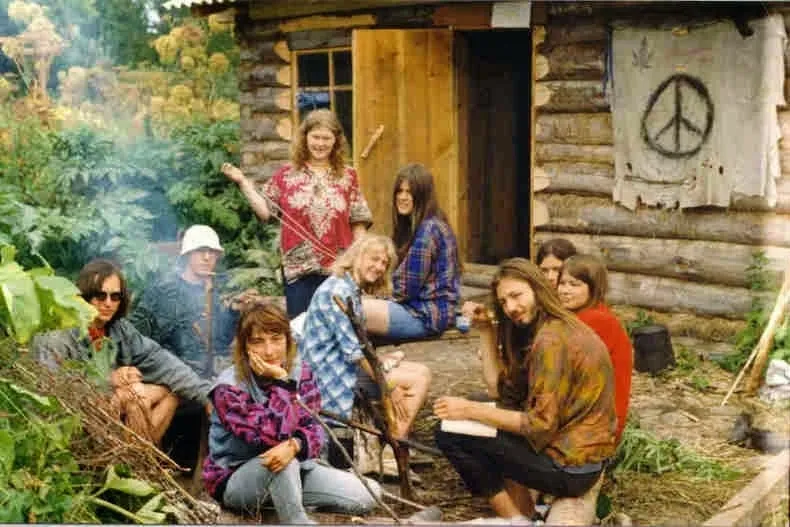
Photo: rural American commune 1970s community gathering, via i.pinimg.com
Every fan knows the fantasy: a world with no possessions, no countries, nothing to kill or die for. What fewer people know is that in the decade after 'Imagine' was written, a handful of American communities decided to stop fantasizing and start zoning. They bought land. They passed resolutions. They erected monuments. Here are five places where the song left the turntable and entered the town charter—and what became of them.
1. The Commune That Read the Album as a Constitution
In the hills of rural Tennessee, a loose federation of back-to-the-land settlers in the early 1970s took 'Imagine' as literal instruction. Shared land, shared labor, a common kitchen, and a firm rule against the accumulation of private property beyond a duffel bag's worth. The settlement lasted nearly a decade—long enough to build homes, raise children, and discover the flaw Lennon himself never fully resolved: someone has to decide who does the dishes. The commune dissolved in a dispute over, of all things, a tractor. Former members still gather annually, less as idealists than as veterans.
2. The Town That Built the Peace Pole
A small Midwestern township—population barely four figures—voted in 1976 to install a public peace monument in its town square, one of dozens of American municipalities swept up in the Bicentennial-era yearning to define the nation's next two hundred years by its ideals rather than its grievances. The pole still stands, re-dedicated after September 11, 2001, when the town's population spontaneously gathered around it. What began as countercultural gesture is now, remarkably, civic furniture.
3. The College Town That Made Disarmament a Ballot Question
In Massachusetts, a university-adjacent city put nuclear freeze resolutions and peace-budget line items on its ballot throughout the early 1980s, inspired in part by the wave of musician-led activism that Lennon's murder had crystallized. The measures passed. The federal government ignored them. But the organizing infrastructure those campaigns built—coalitions of clergy, students, and retirees—endured for decades in local politics, a reminder that losing nationally can still mean winning locally.
4. The Desert Settlement That Tried to Own Nothing
Out in New Mexico, a land trust founded in 1974 attempted the song's hardest verse: no possessions. Members held property in common, farmed collectively, and banned the display of private wealth down to jewelry. The experiment produced two decades of genuine communal life and one enduring lesson in human nature—the community eventually restructured after younger members, raised inside the collective, wanted the one thing their parents had renounced: the right to leave with something.
5. The Suburb That Sang Together
The least likely entry is a leafy suburb outside Cleveland, where a 1970s interfaith council organized annual 'Peace Weeks' featuring communal singing—'Imagine' as civic ritual rather than protest anthem. It sounds quaint. It worked. The tradition continues, passed down to residents born long after Lennon's death, proof that idealism can survive not through doctrine but through repetition.
What the Ruins Teach
None of these places built the world of the song. All of them built something smaller and more durable: habits of gathering, monuments that outlast their politics, arguments about dishes and tractors that are, in miniature, the same arguments nations have. Lennon gave America a melody. What these towns demonstrate—imperfectly, movingly—is that translating a pop song into civic reality is less a blueprint than a practice, renewed every year by people willing to sing the same impossible verse again.