Pajamas as Protest: The Strategic Genius Behind Lennon's Bed-In Demonstrations
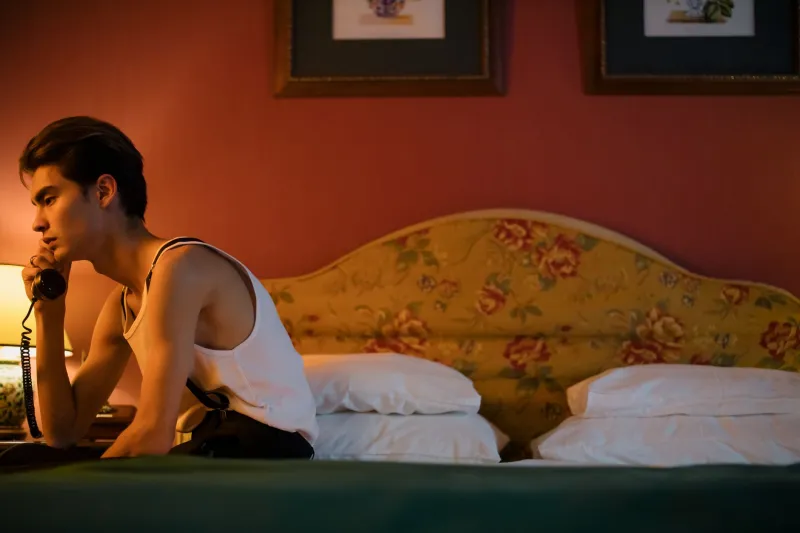
There is a photograph — reproduced on dormitory walls and protest placards for more than five decades — of John Lennon and Yoko Ono sitting upright in a white hotel bed, surrounded by hand-lettered signs reading "Hair Peace" and "Bed Peace." The image is simultaneously absurd and arresting. That tension, it turns out, was entirely the point.
When the couple staged their first bed-in at the Amsterdam Hilton in March 1969, and their second at the Queen Elizabeth Hotel in Montreal that May, they were not simply seeking attention. They were constructing a new grammar of dissent — one that rejected the established vocabulary of marches, megaphones, and confrontation in favor of something far more subversive: stillness, domesticity, and an open invitation to the world's press.
To appreciate the full ingenuity of what Lennon and Ono designed, it is necessary to understand the landscape they were working against.
The Problem with Conventional Protest
By 1969, the American anti-war movement had achieved something extraordinary and something dangerous simultaneously. It had made itself impossible to ignore, and it had given its opponents a ready-made caricature. Television cameras trained on burning draft cards and clashes with police offered the Nixon administration a narrative gift: the protester as threat, as chaos, as the enemy of order.
Lennon, who had been studying the mechanics of media since the Beatles first conquered the Ed Sullivan Show in 1964, recognized this trap with unusual clarity. Traditional protest, however morally urgent, was playing on terrain that the establishment had already mapped. The imagery of confrontation, however justified, could be edited, recontextualized, and weaponized against the very movements it was meant to amplify.
His response was to change the terrain entirely.
The Architecture of the Bed-In
The bed-in was not a spontaneous act of whimsy. It was a carefully constructed media environment, engineered at every level for maximum cultural penetration.
First, consider the setting. A luxury hotel suite is not a street corner. It is a controlled space, one that Lennon and Ono could curate completely — from the flowers on the windowsill to the timing of each interview. Journalists were admitted in rotating shifts, ensuring a continuous supply of fresh coverage while preventing the kind of chaotic scrum that tends to flatten complex messages into simple images.
Second, consider the posture. By remaining in bed, Lennon and Ono rendered themselves visually non-threatening. There was nothing for a camera to frame as aggression. The bed is the most private of domestic spaces, the site of rest, vulnerability, and — in the cultural imagination — love. Occupying it publicly, and filling that space with conversation about war and peace, created a profound cognitive dissonance that no amount of establishment ridicule could entirely neutralize.
Third, and perhaps most brilliantly, consider the invitation. The bed-ins were not performances delivered to a passive audience. They were open dialogues. Lennon and Ono spoke with anyone who came — journalists, clergy, comedians, politicians, and ordinary citizens. The Montreal bed-in produced "Give Peace a Chance," recorded spontaneously in the hotel room with a rotating cast of visitors. The song became a protest anthem not because it was handed down from a stage, but because it was made communally, in a space that felt accessible.
Anticipating the Logic of Networked Activism
Decades before the phrase "going viral" entered the cultural lexicon, Lennon understood something fundamental about how ideas spread: they need a memorable image, an emotional hook, and a point of entry for participation.
The bed-ins offered all three. The image of two people in bed asking for peace was inherently reproducible — easy to describe, easy to sketch, easy to parody (and parody, as any media strategist will confirm, is its own form of amplification). The emotional register was disarming rather than confrontational, inviting empathy rather than defensiveness. And the open-door format of the event itself modeled the participatory logic that social media platforms would later formalize.
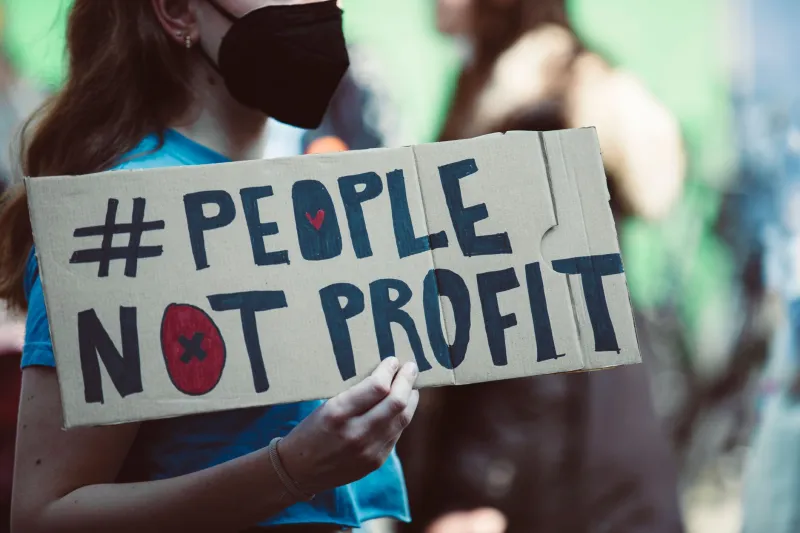
Consider how contemporary movements operate. The Black Lives Matter protests of 2020 were organized not primarily through physical infrastructure but through images — a knee on a neck, a raised fist, a hand-painted sign — that circulated through digital networks and created points of identification for millions of people who never attended a single march. The Women's March of 2017 was defined as much by the pink knitted hat as by any speech delivered from a podium. In each case, the visual symbol did work that words alone could not.
Lennon grasped this principle in an era when the fastest available medium was network television, and he designed accordingly. The bed-in was, in the vocabulary of our current moment, a piece of presential art — an event whose physical reality was inseparable from its mediated representation, and whose meaning accumulated through repetition and reinterpretation.
Vulnerability as a Political Instrument
There is a dimension of the bed-in that tends to be underappreciated in retrospective accounts: the deliberate embrace of vulnerability as a political instrument.
Lennon was, at that moment, the most famous musician on earth. He could have deployed that fame in any number of conventional ways — benefit concerts, political endorsements, public rallies. Instead, he chose to appear before the world in pajamas, in bed, with his wife, in a posture that invited mockery. And mockery came, in abundance, from commentators who dismissed the entire enterprise as the self-indulgence of a millionaire rock star.
But vulnerability, when chosen rather than imposed, carries its own authority. By refusing to armor himself in the conventional trappings of political credibility, Lennon signaled something important: that peace was not the exclusive property of politicians or generals or credentialed experts. It was a human aspiration, available to anyone willing to simply insist upon it — even from a bed, even in pajamas, even at the cost of ridicule.
This is a lesson that contemporary activists might consider carefully. In an era when authenticity is both the most coveted and most contested currency in public life, the willingness to appear genuinely, even awkwardly human can carry more persuasive weight than any polished campaign.
What the Blueprint Leaves Behind
The bed-ins did not end the Vietnam War. Lennon harbored no illusion that they would. What they accomplished was something more durable: they demonstrated that the language of protest is not fixed, that its forms can be reinvented, and that the most effective interventions are often those that catch their audiences off guard.
For movements navigating the attention economy of contemporary America — where the competition for cultural space is fiercer than at any previous moment in history — the bed-in blueprint offers a set of enduring principles. Control your environment. Choose disarming over threatening. Create images that are inherently reproducible. Invite participation rather than demanding it. And never underestimate the radical potential of simply being human in public.
From the Peace Bed's perspective, the most significant legacy of those Amsterdam and Montreal hotel rooms is not the songs they produced or the headlines they generated. It is the proof of concept they established: that peace, to be persuasive, must first be imaginable. And imagination, Lennon understood better than almost anyone, begins in the most ordinary of places.