Still Listening: The John Lennon Songs That Speak to America's Unfinished Business
There is something quietly devastating about the fact that John Lennon's music remains so relevant. The idealism embedded in his catalog was always intended as a provocation toward a better future — not a permanent soundtrack for a present that refuses to improve. And yet here we are, in an America fractured by inequality, haunted by gun violence, and exhausted by political polarization, still reaching for the same songs he wrote in the early 1970s as though they were composed last Tuesday.
This is not a nostalgia exercise. What follows is a deliberate, opinion-driven pairing of Lennon's most politically resonant recordings with the specific crises defining American life right now. It is an invitation to listen again — not passively, but with the kind of active, uncomfortable attention that Lennon always demanded of his audience.
"Working Class Hero" — For the Crisis of Economic Inequality
Released in 1970, "Working Class Hero" remains one of the most unflinching portraits of class consciousness ever committed to a pop recording. Stripped to a single acoustic guitar and Lennon's most unadorned vocal, the song traces the systematic crushing of working-class aspiration — through schooling, through conformity, through the slow erosion of self-belief in service of a system designed to keep people in their place.
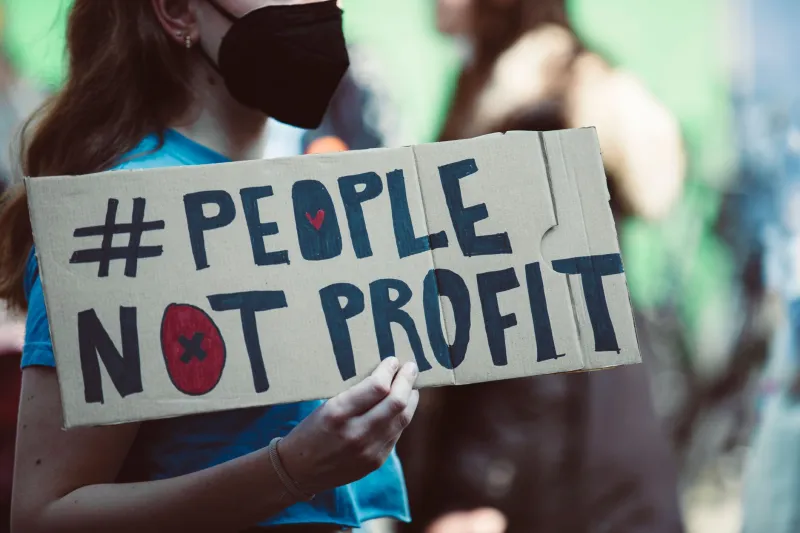
In an America where the gap between the wealthiest and everyone else has reached Gilded Age proportions, where a single medical emergency can erase a family's financial stability, and where the promise of upward mobility has become increasingly statistical fiction, this song functions less as historical artifact and more as live reporting. Lennon's bitter observation that "you're still fucking peasants as far as I can see" was considered shocking in 1970. Today, it reads like an economic policy brief.
The song's value is not merely diagnostic. It challenges listeners to examine the mechanisms by which inequality is normalized and internalized — a psychological dimension of economic injustice that pure data cannot capture. For any American grappling with why economic populism struggles to sustain itself even among those who would benefit most from it, this four-minute folk song offers more insight than most political analysis.
"Imagine" — For a Nation Struggling to Find Common Ground
It has become almost too easy to reach for "Imagine" — so ubiquitous has it become as a symbol of idealistic longing that its actual content is often heard without being listened to. But sit with the lyrics of this song in the context of America's present polarization, and its radicalism reasserts itself.
Lennon was not singing about compromise. He was not advocating for civility or bipartisan dialogue. He was asking his listeners to perform an act of genuine imagination — to conceive of a world organized around fundamentally different principles, where national identity, religious tribalism, and the accumulation of private wealth no longer functioned as the primary sources of human division. This is a far more demanding vision than the song's reputation as a gentle anthem for unity suggests.
In a country where political identity has become so deeply bound to geography, religion, and cultural affiliation that many Americans effectively inhabit separate informational realities, "Imagine" is not a comfort — or at least, it should not be. It is a challenge. Lennon was asking us to question the structures we mistake for nature, to recognize that the divisions tearing the country apart are not inevitable but chosen, and therefore capable of being unchosen.
"Give Peace a Chance" — For the Gun Violence Epidemic
The particular cruelty of placing this song in the context of American gun violence is not lost on anyone who knows how Lennon's life ended — shot outside his own home in New York City in December 1980. He was killed by a man with a legally obtained firearm, in a country that has since experienced tens of thousands of similar deaths with a collective shrug that would have horrified him.
"Give Peace a Chance" was written as an anti-war anthem, but its core demand — that we choose, actively and repeatedly, to pursue nonviolence as a way of life — applies with equal force to the domestic epidemic that kills more Americans annually than many foreign conflicts. The song's structure, its chant-like repetition, its invitation to collective voice, makes it uniquely suited to the streets outside legislatures where advocates for gun safety reform have gathered year after year, grief-stricken and determined.
There is also something worth noting in the song's deliberate simplicity. Lennon understood that in moments of profound moral urgency, complexity can become a form of evasion. The demand is simple. The resistance to it is not.
"Power to the People" — For Movements Demanding Structural Change
Released in 1971 at the height of Lennon's most explicitly political period, "Power to the People" was written in direct response to an interview challenge from Tariq Ali, who pressed Lennon to put his radical sympathies into something more concrete than pretty melodies. The result was a driving, urgent declaration that the transfer of power to ordinary people was not merely desirable but overdue.
For American movements organized around structural reform — whether focused on voting rights, criminal justice, housing equity, or labor organizing — this song offers both solidarity and a useful provocation. Lennon was not interested in incremental adjustment. He was interested in transformation. Whether one agrees with the totality of that ambition or not, the energy it represents — the insistence that the existing distribution of power is not natural or permanent — is exactly what sustains movements through the long periods of resistance and setback that meaningful change always requires.
"Beautiful Boy (Darling Boy)" — For Every Parent Living With the Fear of School Shootings
This choice is perhaps the most emotionally direct on this list. Written for his son Sean, "Beautiful Boy" is one of Lennon's most tender recordings — a father's love letter to a child, full of wonder at the ordinary miracle of watching a person grow. It was released just weeks before his murder.
In the context of an America where active shooter drills have become a routine feature of childhood, where parents send their children to school carrying a fear that previous generations never had to hold, this song takes on a dimension of grief that its author could not have anticipated. Listening to it today, knowing what we know about the epidemic of school shootings, is an act that connects personal love to political urgency in a way that policy arguments alone cannot achieve.
Sometimes the most powerful argument for change is not a statistic but a feeling — the recognition that what is being lost in every act of preventable violence is precisely this: a beautiful boy, a beautiful girl, a future that someone loved with exactly this kind of tenderness.
The Invitation
Lennon's music was never meant to make us comfortable. It was meant to make us honest — with ourselves, with our country, and with the distance between the world we have and the world we are capable of building. These songs are not consolation. They are a conversation he began and left for us to continue.
Put them on. Listen closely. Then ask yourself what he would want you to do next.