Where the Personal Became Political: John Lennon and the Revolutionary Power of Intimate Space

Photo: Unknown authorUnknown author, Public domain, via Wikimedia Commons
The Room Where It Happened
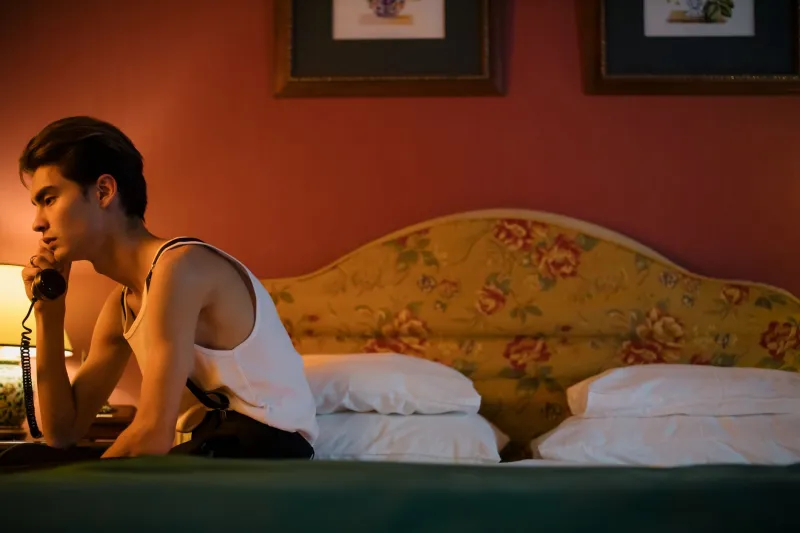
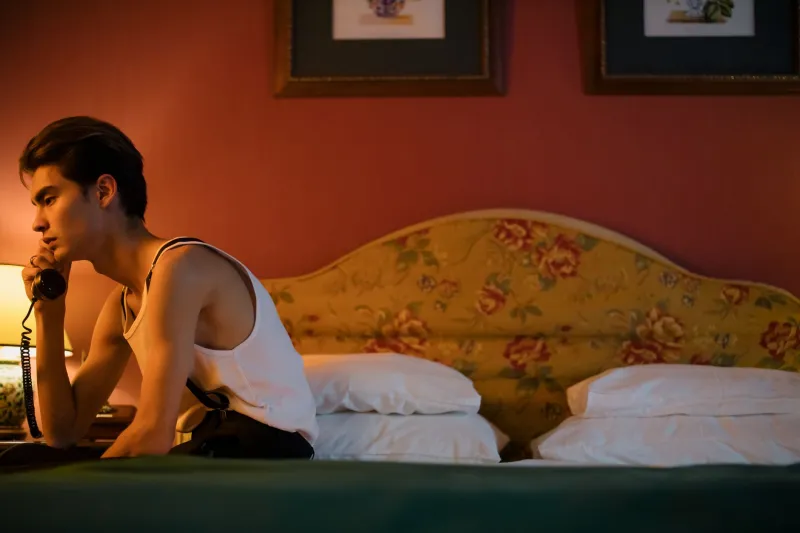
In the spring of 1969, John Lennon and Yoko Ono checked into Room 902 of the Amsterdam Hilton and did something that confounded journalists, baffled politicians, and electrified a generation of peace activists: they stayed in bed. For seven days, they received reporters, musicians, and curious onlookers from beneath white hotel sheets, transforming a space universally associated with rest, intimacy, and withdrawal from the world into one of the most scrutinized political platforms of the twentieth century.
The instinct to dismiss this gesture as mere celebrity eccentricity has always been tempting — and always been wrong. What Lennon and Ono engineered in that Amsterdam hotel room was a sophisticated reclamation of domestic space, a deliberate inversion of the assumption that meaningful political action could only occur in the streets, the halls of Congress, or the chambers of institutional power. The bedroom, in their hands, became a lecture hall, a press room, and a sanctuary simultaneously.
The Architecture of Vulnerability
To understand why this mattered, one must consider what the bedroom historically represents in American cultural life. It is the one room in a home that society has conspired to keep invisible — the space of private grief, private desire, private weakness. American public culture, in particular, prizes a certain performed invulnerability from its figures of influence. Politicians wear suits. Executives occupy corner offices. Authority wears armor.
Lennon stripped that armor away, quite literally. By receiving the world in pajamas, beneath sheets, in a posture that signals rest rather than command, he proposed something genuinely subversive: that vulnerability itself could be a form of strength, and that authenticity — radical, unguarded, domestic authenticity — might be more disarming than any conventional display of power.
This was not accidental. Lennon and Ono had thought carefully about the optics. They knew that cameras would follow them anywhere, and they chose to lead those cameras somewhere unexpected. The result was a visual argument that no press release or protest march could fully replicate: images of two human beings, unarmored and unhurried, insisting on peace from the most human of settings.
Home Studios and the Intimacy of Creation
The hotel room was not the only domestic space Lennon conscripted for political purposes. His home recording environments — particularly the informal studio he maintained at Tittenhurst Park — functioned as extensions of the same philosophy. The recordings made there, including early sessions for the Imagine album, carry an audible quality of intimacy that distinguishes them from the polished productions of conventional studio work.
This was a deliberate aesthetic and political choice. By making the conditions of creation visible — by allowing the domestic hum of a home environment to bleed into the sonic texture of his music — Lennon was arguing that art born from ordinary life carries a different kind of authority than art manufactured in the controlled, commercial machinery of a professional studio. The home, in this reading, is not a retreat from the world but a more honest engagement with it.
For American listeners in the early 1970s, who were navigating the psychological wreckage of Vietnam, the assassinations of the previous decade, and the erosion of institutional trust, there was something profoundly reassuring about this. Lennon was not speaking from on high. He was speaking from somewhere recognizable — a room, a bed, a kitchen table — and that proximity carried its own form of moral weight.
Reclaiming Space in an Age of Surveillance
The lessons embedded in Lennon's spatial politics have grown more rather than less relevant in the decades since his death. Contemporary American activists operate in an environment where public protest is increasingly surveilled, criminalized, and physically contained. The geography of dissent has been steadily narrowed by permit requirements, designated protest zones, and the ever-present eye of state and corporate monitoring.
In this context, the domestic space Lennon championed takes on renewed strategic significance. The home, the bedroom, the private kitchen table — these remain, at least nominally, territories where individual expression retains a degree of protection and autonomy. The explosion of livestreamed activism, bedroom podcasting, and home-based political organizing during and after the COVID-19 pandemic demonstrated that Lennon's instinct was not merely poetic but practically sound. When the streets close, the rooms open.
Modern organizers who conduct town halls via video from their living rooms, who build political communities through intimate digital content rather than mass spectacle, are working within a tradition that Lennon helped establish. The medium has changed; the underlying argument — that the personal space is a legitimate and powerful site of political meaning-making — has not.
The Sanctuary as Statement
There is one further dimension of Lennon's domestic politics that deserves careful attention: the idea of sanctuary. The word itself carries both political and spiritual resonances in American life, from the sanctuary cities that have sheltered undocumented immigrants to the church sanctuaries that harbored civil rights activists in the South. A sanctuary is a space that declares itself exempt from the ordinary operations of power — a room that says, within these walls, different rules apply.
Lennon's bed-in performances were, at their deepest level, sanctuary declarations. By occupying a hotel room and refusing to perform the expected behaviors of a celebrity — the press conference, the formal statement, the choreographed public appearance — he and Ono were insisting that this space operated according to different logic. Here, the currency was not power or productivity but presence, conversation, and the patient articulation of an alternative vision.
For a nation that has long struggled to imagine alternatives to its dominant narratives of competition, consumption, and militarism, that kind of sanctuary — however temporary, however symbolic — represents something genuinely necessary. Not an escape from the world, but a pause within it: a space to remember what one is fighting for and to embody, however briefly, the world one hopes to create.
What the Bed Teaches Us
John Lennon did not invent the idea that the personal is political — that formulation belongs to the feminist organizers of the same era who were making the same argument in far more rigorous and consequential terms. What he did was translate that argument into a visual and musical language that reached millions of Americans who might never have encountered it otherwise.
The image of a man in bed, holding a sign that reads "Hair Peace" and "Bed Peace," is simultaneously absurd and entirely serious. It asks something of the viewer: not to march, not to donate, not to sign anything, but simply to reconsider what they have been taught about where power lives and where resistance is possible.
The answer, Lennon suggested, might be closer than anyone imagined. It might be, in fact, precisely where you wake up each morning.