The Recordings Nobody Taught You: Why Lennon's Forgotten B-Sides Carry the Ideas That Still Scare Us
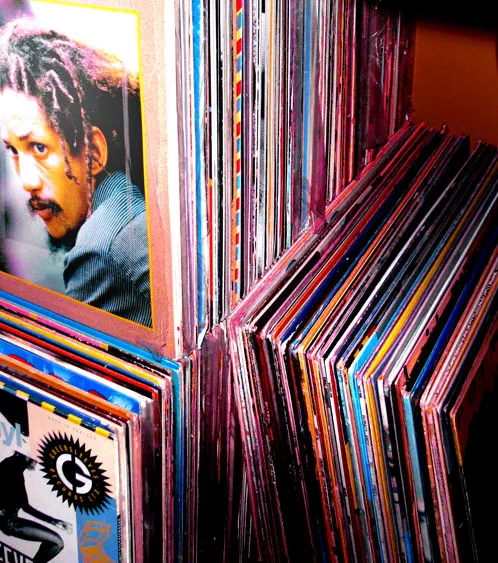
Photo: dubdem sound system, CC BY 2.0, via Wikimedia Commons
Every culture curates its saints. The process is rarely conscious and almost never honest — it operates through repetition, institutional endorsement, and the slow accumulation of what gets played at memorials, taught in music appreciation classes, and licensed for television commercials. What emerges from this process is not an artist but an artifact: a version of the person shaped entirely by what the culture found useful and sanded smooth of everything it found threatening.
John Lennon has been subject to this process more aggressively than almost any other American cultural figure of the twentieth century, which is notable given that he was not, technically, American at all. The Lennon that most people in the United States encounter — through streaming playlists, film biopics, and the annual December memorial gatherings in Central Park — is a carefully edited version of a far stranger, more difficult, and more genuinely radical human being. The edits are not random. They follow a logic. And that logic is most clearly visible in the recordings that did not make the cut.
What the Canon Preserves
The Lennon canon, as it functions in American popular culture, is built around a small cluster of recordings: "Imagine," "Give Peace a Chance," "Happy Xmas (War Is Over)," "Mind Games," "Whatever Gets You Thru the Night," and a handful of others. These are songs that have been absorbed into the ambient texture of American life — recognizable, emotionally accessible, and sufficiently abstract in their idealism to be claimed by a remarkably wide range of political and cultural positions.
What they share, almost without exception, is a quality of aspiration uncoupled from specific critique. They invite the listener to feel hopeful without demanding that the listener examine what, precisely, they are hoping to change. This is not a flaw in the songs themselves — "Imagine" is a compositional masterpiece, as any serious analysis of its structure will confirm. But it is a selection effect in how the canon was assembled. The recordings that survived the curation process were, by and large, the ones that could be embraced without discomfort.
The Songs That Did Not Survive
Consider, by contrast, what exists in the margins of Lennon's catalog. Tracks like "Working Class Hero" — technically well-known but rarely played in institutional contexts — deploy a fury toward class stratification that makes most American cultural gatekeepers visibly uncomfortable. The song does not ask you to imagine a better world. It describes, with cold precision, the mechanisms by which the existing world reproduces inequality across generations. It names the school system, the social pressure to conform, the manufactured consent of the comfortable life. It is not aspirational. It is diagnostic.
Or consider the recordings from the Some Time in New York City album, which critics savaged on its 1972 release and which has never fully recovered its reputation in the decades since. The album addressed the Attica prison uprising, the internment of Irish political prisoners, the treatment of Indigenous Americans, and the specific circumstances of women's oppression with a directness that had no precedent in mainstream rock and has had few successors. It was not a subtle record. It was not designed to be played at graduation ceremonies. And it has been, in the vocabulary of music criticism, quietly filed under "noble failure" — a designation that functions, conveniently, to remove it from serious consideration.
The Packaging of Radicalism
There is a pattern here worth naming explicitly. The recordings that have been preserved and celebrated are, with few exceptions, the ones in which Lennon's radicalism was expressed through emotional universalism rather than specific political analysis. The recordings that have been minimized or forgotten are the ones in which he named names, identified systems, and refused the comfort of abstraction.
This is not a coincidence. American popular culture has a well-documented capacity to absorb the aesthetic of dissent while neutralizing its content. The T-shirt bearing a revolutionary's image, the protest song licensed for a car commercial, the radical poet taught in schools with the politics carefully bracketed as "historical context" — these are all expressions of the same cultural process. Lennon's canon has been subject to precisely this treatment, and the deeper cuts are the evidence.
The B-sides and album tracks that circulate among serious listeners — people who go looking beyond the playlist — contain a Lennon who was angrier, more specific, more willing to alienate, and ultimately more honest about the scale of what he believed needed to change. These are not lesser works. In many cases, they are more sophisticated than the hits, precisely because they were written without the pressure of commercial viability.
What We Lose When We Only Teach the Hits
The stakes of this selective memory are not merely aesthetic. When a culture teaches only the most palatable version of its dissidents, it teaches a distorted lesson about what dissent looks like and what it costs. Students who encounter only "Imagine" come away with the impression that Lennon's radicalism was fundamentally gentle — a matter of closing your eyes and wishing hard. Students who encounter "Working Class Hero" or the Some Time in New York City recordings come away with something closer to the truth: that Lennon believed the systems needed to change, not just the attitudes.
The difference matters. Attitude change is something a culture can absorb and survive. Systemic change is something a culture must reckon with. The canon preserves the former and quietly buries the latter.
Listening Differently
What the forgotten recordings demand is a different kind of listening — one that is willing to sit with discomfort, to follow an argument rather than simply feel a feeling, to allow the music to challenge rather than merely console. This is, not incidentally, the kind of listening that Lennon himself modeled in his most searching interviews and writings. He was suspicious of his own most beloved work precisely because he understood how easily beauty could be used as an anesthetic.
The peace that Lennon pursued was never the peace of sedation — the comfortable numbness of a culture that has learned to feel the right emotions without changing anything. It was the harder, more demanding peace that requires looking clearly at what is broken and choosing, with full knowledge of the cost, to work toward something better.
That Lennon lives in the recordings nobody taught you. He is worth finding.