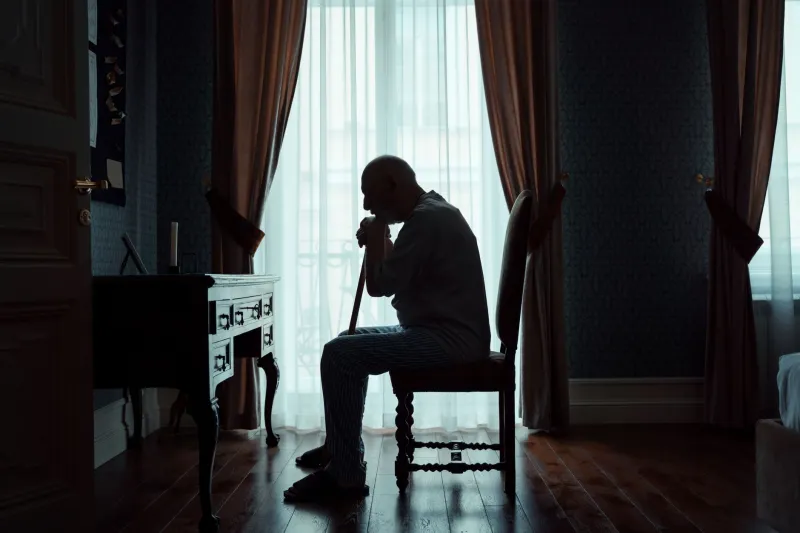
Before the Argument, the Silence: John Lennon and the Lost Discipline of Listening Across Difference
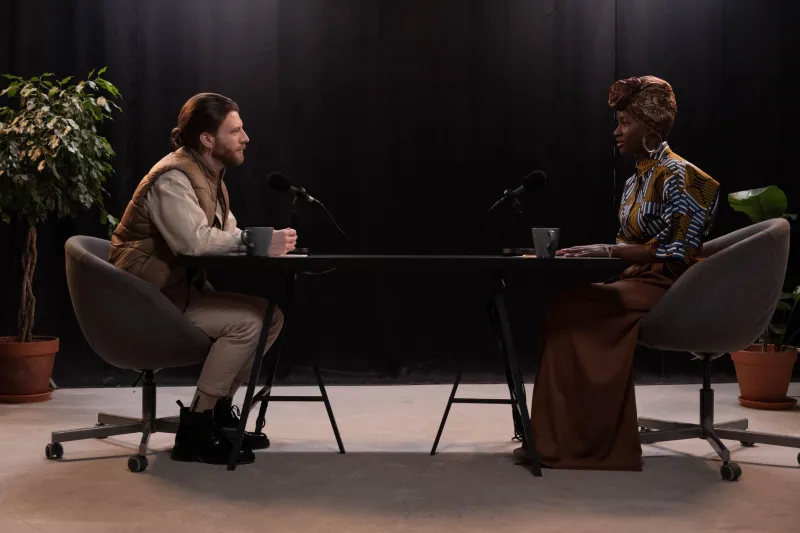
There is a particular kind of courage that does not announce itself. It does not march, does not chant, does not raise a fist toward the sky. It sits down across from someone who despises everything you represent — and asks a question. Then waits. Then actually absorbs the answer.
John Lennon practiced this courage with a consistency that history has largely failed to honor. In the voluminous record of his activism — the Bed-Ins, the anti-war anthems, the confrontations with the Nixon administration — the quieter episodes tend to disappear. The moments when Lennon chose reception over projection. When he listened.
In a country that currently processes its deepest disagreements through algorithmic outrage and cable news combat, revisiting that discipline feels less like nostalgia and more like emergency.
The Radical Act of Attention
When Lennon and Yoko Ono staged their famous Bed-In for Peace in Montreal in May 1969, the event attracted a parade of visitors representing wildly divergent viewpoints. Al Capp, the conservative cartoonist behind Li'l Abner, arrived openly hostile, needling Lennon about the perceived naivety of peace activism with a sharpness that bordered on contempt. The exchange, which was recorded and has been partially preserved, is instructive not for what Lennon said in rebuttal — though he held his ground — but for the degree to which he permitted Capp's argument to fully form before responding.
He did not talk over him. He did not perform exasperation for the assembled press. He let the challenge land, considered it, and engaged with its actual substance.
This was not passivity. It was strategy rooted in something deeper than tactics: a genuine belief that no political position, however mistaken, emerges from a vacuum. Lennon had absorbed enough of his own contradictions — the working-class boy who became fabulously wealthy, the peacenik who had been physically violent in his youth — to understand that people contain multitudes, including the people who oppose you.
"I'm not going to change the world by shouting at it," he remarked during one of the many interviews from that period. The sentence sounds almost too simple. It is, in fact, a complete theory of political communication.
Conversations Across the Divide
The Capp confrontation was not an isolated incident. Throughout the early 1970s, Lennon engaged with figures who occupied ideological territory far removed from his own — not always gracefully, not always successfully, but with a regularity that suggests genuine philosophical commitment rather than publicity management.
His willingness to appear on programs where he would face skeptical or adversarial questioning, rather than retreating into sympathetic media environments, reflected an understanding that preaching to the converted is a form of political stagnation. Lennon seemed to intuit what communication theorists would later formalize: that movements calcify when they stop engaging with their critics and begin speaking exclusively to themselves.
Contemporary organizers have noticed this gap in modern activism. "We've built incredibly efficient ecosystems for mobilizing people who already agree with us," observes one longtime community organizer working in the Midwest on economic justice issues. "What we've lost is the infrastructure for the harder conversation — the one with someone who's skeptical, or hostile, or just hasn't thought about it yet. Lennon was doing that infrastructure work in hotel rooms in 1969."
The observation points to something structural. The media landscape that Lennon navigated, for all its limitations, still compelled public figures to encounter genuine opposition in real time. A television appearance in 1971 might place a peace activist in direct conversation with a Vietnam War supporter before a shared national audience. The contemporary equivalent — a social media thread, a podcast for the already-persuaded — rarely produces that friction. And friction, it turns out, is where listening becomes necessary.
Empathy as Political Technology
It would be a mistake to sentimentalize Lennon's approach as mere warmth or openness. There was calculation in it. He understood that dismissing an opponent's worldview wholesale, without first demonstrating that you had genuinely engaged with it, forfeited the argument before it began — particularly with the vast middle of the American public that was watching and had not yet decided.
This insight has been largely abandoned in the current moment. The dominant mode of political communication across the ideological spectrum prioritizes the performance of conviction over the demonstration of comprehension. We signal our values by displaying our contempt for opposing ones. The result is a public discourse in which everyone is broadcasting and almost no one is receiving.
Several researchers studying political polarization in the United States have documented what they describe as a "listening deficit" — not merely a shortage of civil disagreement, but a measurable decline in the capacity to accurately represent an opposing viewpoint before critiquing it. People increasingly argue against caricatures. The actual positions of political opponents, in their full complexity, go largely unexamined.
Lennon's method, imperfect as it was, worked against this tendency by design. His questions — and he asked many of them, in interviews, in conversations, in the informal exchanges that surrounded his public events — were not rhetorical. They sought information. They invited elaboration. They treated the person across from him as someone whose internal logic was worth understanding, even if it led somewhere Lennon found deeply wrong.
What Silence Makes Possible
There is a moment in the acoustic recording of the Montreal Bed-In that deserves more attention than it typically receives. Lennon, in the middle of a crowded, chaotic room, pauses before responding to a particularly aggressive line of questioning. The pause lasts only a few seconds. But in the context of the surrounding noise — the competing voices, the reporters, the hangers-on — it reads as a deliberate act. A choice to not fill the space immediately. To let the question settle.
That pause is, in microcosm, the entire philosophy.
Activists working on issues ranging from criminal justice reform to climate policy have increasingly recognized that the speed of contemporary communication works against the depth required for genuine persuasion. "We're optimized for reaction," notes one organizer who works with youth climate groups in the Pacific Northwest. "Lennon was optimized for something slower. He wanted to understand why people thought what they thought. That's actually harder than marching."
It is harder. It requires tolerating the discomfort of encountering a worldview that challenges your own without immediately reaching for the nearest rhetorical weapon. It requires accepting that understanding is not the same as agreeing — that you can fully comprehend why someone believes something and still believe they are wrong, and that the comprehension itself is not a concession but a precondition for meaningful engagement.
The Discipline America Needs
John Lennon was not a saint of dialogue. He was capable of impatience, of dismissiveness, of the ordinary human failure to extend to others the generosity he preached. But the aspiration he embodied — the insistence that peace, real peace, required actually hearing the people you disagreed with — remains as radical now as it was in 1969.
America is not short on voices. It is short on ears.
The Bed-In was not merely a theatrical gesture. It was, among other things, an extended experiment in what happens when you make yourself radically available — not just to your supporters, but to your critics, your opponents, the curious, the hostile, and the unconvinced. What Lennon discovered, and what the historical record reflects, is that availability of that kind changes the terms of the conversation. It does not guarantee agreement. It does not dissolve real conflict. But it opens a door that performance, volume, and certainty invariably keep shut.
In a country struggling to locate even the most rudimentary common ground, that door — and the discipline required to open it — may be John Lennon's most urgent and most neglected legacy.